


Yoga Fish Pose and Restorative Yoga for Neck Pain, TMJ Pain, Jaw Pain, Rib Pain, and Shoulder Pain. Heal the SCM, Scalene Muscles-and Even your Pelvic Floor-by Opening the Heart Center.

Updated: Apr 3

The back of your neck hurts, your TMJ and the full jaw are in pain, your upper ribs are under stress, and the discomfort in the back of your shoulders is almost constantly in your mind.
You may not be as aware of these symptoms, but your chest is closing off, your pectoralis muscles are hypertonic, your "warrior clavicles" are drawing in, and your anterior (front) neck is tight. Most of us feel the problem is in our upper trapezius muscles—the back of our necks and shoulders—and because the jaw seems mysterious to us, we feel that discomfort is separate, happening on its own.
Your united structure is experiencing dysfunction and sending you signals. The discomfort is asking for your help. As a culture, we think little about the muscles of the front body, or if we do, we are thinking of core workouts—which are so important—but in daily life, most of us are living with anterior (front of body) tension. Our front bodies need opened up; they need the reverse of “tech neck" posture, the clavicles need to be reminded they can unguard the heart center. To heal jaw pain and TMJ pain, even clicking and grinding, we must bring relief to the front of our necks.
I have been doing TMJ manual therapy since 2004, and so I know what muscles to work directly on to end jaw clicking, but you are a united structure. You do not need injections—which can create muscle imbalances and make your jaw worse in the long run. Here is the thing: to end pain cycles in the back of the neck, and the overall jaw, you must learn to “open up” the front body. Your jaw—even when it has its own pattern of dysfunction—needs your neck to be happy.
Healing the back of your neck, ending headaches and even migraines, will take healing the front of your neck. It takes an open front body—open heart center and a free, unstuck ribcage working with the neck muscle—allowing for a full, deep and slow breath. A full breath takes pressure away from the neck and jaw. To understand more about how the neck influences the ribcage, read about the anterior scalene muscles HERE.
Using the gentle art of yoga and the active and strengthening art of yoga, you can literally reshape your tissues and learn to control—or even end—your neck pain and jaw pain cycles.
To heal, you are thinking of reshaping your tissues, stretching and building strength, creating muscle balance in the jaw and neck. But you are also tapping into your nervous system; you are diving into the most important aspect of healing; allowing your nervous system to come to a place of rest. From a place of rest, the nervous system turns down pain signals.
I know for sure: women who do these postures, and allow themselves to come to a place of healing rest, report relief from neck, TMJ, and overall jaw pain.
"You can withdraw from your senses and retreat into healing silence. And whereas that is true with all of fitness, yoga holds a special place in the tradition of balance and medicine”.
—The Elemental Woman.
Keep scrolling for bolstered Variations.
Fun facts about Fish Pose (including the variations): These postures also stretch the psoas muscles, the muscles of the belly, the muscles of the rib cage, and stimulates the organs.
In active Fish Pose, as you lift your neck back up out of the posture, you are strengthening the anterior neck muscles, including the deep anterior neck flexors.
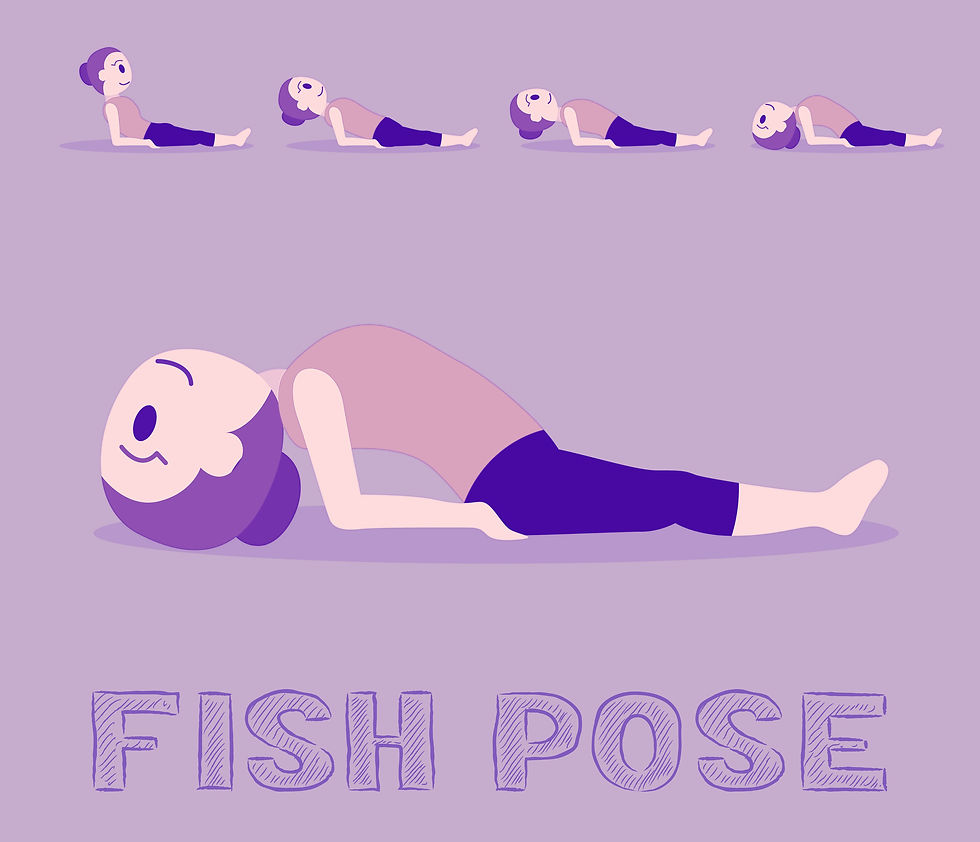
Active Fish Pose

Step-by-step instructions for Active Fish Pose
When I was in my early twenties, in the early 2000s, I spent a lot of time in Active Fish Pose. It reshaped by spine and healed my neck. This posture is magic because it stretches everything that needs stretching and then it activates and strengthens.
Directions for Active Fish Pose
Lie down on your yoga mat and bend your knees, knees pointing to the ceiling, the soles of your feet on the ground.
There are a few ways to put your hands. The goal of placing the hands under the hips it to get the arms and elbows close to the body, as well as give you a platform (your hands, forearms, and elbows are your platform) as you open the chest. The arms might not touch the body, or they could be nearly tucked under the body, depending on someone’s flexibility. Start gently.
1) As you inhale, lift your hips (just a little) off the ground enough that you can slide your hands—palm side down—under your hips.
or
2) As you inhale—and this is just my personal way of describing (and doing) this “flexible” version — lift your hips off the ground (just a little). Now clasp your hands together under your hips. You may need to sway a little to the right and left as you clasp your hands, drawing each elbow closer together and drawing them under the body (or close to the body). Then, lay your palms flat down on the ground. This is now your platform.
Everyone will let their hips fall back down to the ground on top of the hands. Your hands will remain on the ground the whole time.
Remember to exhale.
Now, inhale and activate your platform: press your hands, forearms, and elbows firmly into the ground.
Remember to exhale.
Pressing your shoulders down, inhale, and lift your torso and head up off the ground, then extend the neck, allowing it to drop back towards the floor.
1) If you have little flexibility in your low back, there will not be much of a arch. Your chest may not be open enough—and your neck may not even feel safe enough—to really extend far back. The back of your head may just barely graze the ground. This is a great place to start! Exhale. Breathe.
or
2) If you are flexible, your back arches and your chest moves towards the ceiling, with the elbows tucked under the body, your platform secure, and you feel safe to extend your neck, the crown of your head will contact the floor. It is not pressing into the floor. Your head is brushing up against the floor. No pressure on the spine.
You can keep the knees bent—a great beginning place or an option for tight low back and psoas muscle tension. Or you can straighten your legs and lengthen the body fully out. If you straighten your legs, they are also active, part of your platform.
Inhale and exhale slowly. Allow the air to flow and energize the spine. From the tip of the spine—the jaw — to the bottom of the spine—the pelvic floor. Feel the air move into the low back, side ribs, low belly, and pelvic floor.
You can hold this posture for only 15 seconds, 30 seconds, and up to three minutes.
To come out of the posture:
Inhale.
With the exhale, lift your torso and head back up. Looking straight forward, and then relaxing your platforms, lower your torso down, head to the floor, lying in a normal, resting posture.
When you are doing that lift and exhale, allow your pelvic floor to zip up and in; your entire core is engaged as you lift.
When you are back on your mat, in resting pose, check in and see if your core—your pelvic floor—and your neck are relaxing.
Notice how you feel.
Many women live in a state of tension throughout the day. To heal, your body needs to learn to alternate between work and relaxation.
Bolstered Variations
Breathing and Neck Pain, TMJ Pain, and Jaw Pain, Rib Pain, and...
the Pelvic Floor.
Variation One
Notice in this picture...
See how her feet are touching: the pelvic floor is open. The chest is open. Not only is this posture healing to your neck and jaw, but at the exact same time you are restoring your pelvic floor.
From working with women who have jaw and pelvic floor pain, I know that establishing a connection between these two spaces is essential to healing throughout the structure.
In this posture, you are opening your throat center, heart center, and what yoga calls your "root," your pelvic floor.
To see my post on the throat and heart center—regarding healing neck pain, TMJ pain, and jaw pain, rib pain—head HERE (Post Coming Soon!).
Here is what not to do:

The picture of this posture, the one with the pink X through it, reminds me of a woman sleeping on a pillow that is too large. Her anterior neck muscles being placed in a shortened position. We already shorten these muscles (forward head posture) in our daily lives! To heal, we need to set aside specific time to open up the chest and gently extend the neck.
Variation Two
Restorative yoga includes Reclined Bound Angle Pose.
Notice in this picture...

Doing this posture with the head and neck resting in their "normal" position is fine, but I would consider a variation. To shift the anterior holding pattern of your neck, I would allow for a gentle extension of the neck off the bolster. Not dropped off the bolster, but the back of the head resting in a way that allows for a more open throat center.
Other Healing Variations
Since you have the bolster out...

The reason for this post is to illustrate yoga postures that can heal your neck and jaw pain. For all of our various physical and emotional healing needs, we only have so much time to give. You must carve out time, but it does not have to be for this full-bolstered series; this is just an option.
My strong recommendation is that every woman needs to develop a relationship with opening the front body. And if you are in pain—or better yet, to keep pain from heading your way—experiment with full fish or a bolstered variation.
You can also choose any number of healing stretches from my other post on stretching and releasing the scalene muscles HERE.
As the caption of the above graphic says, create magic in your flow—not by rushing through and going through the motions—but with a focused intention of creating light and space in the heart and throat center.
Muscles of the Anterior Neck
Let’s bring this post to an end by helping you visualize the muscles you are trying to heal!
When you open up the front of your body, you heal the back of the body. As an example, your upper traps will relax when they stop being pulled forward by the tight pectoralis muscles.
Here are pictures of some of the muscles you are affecting when you open up the front body:


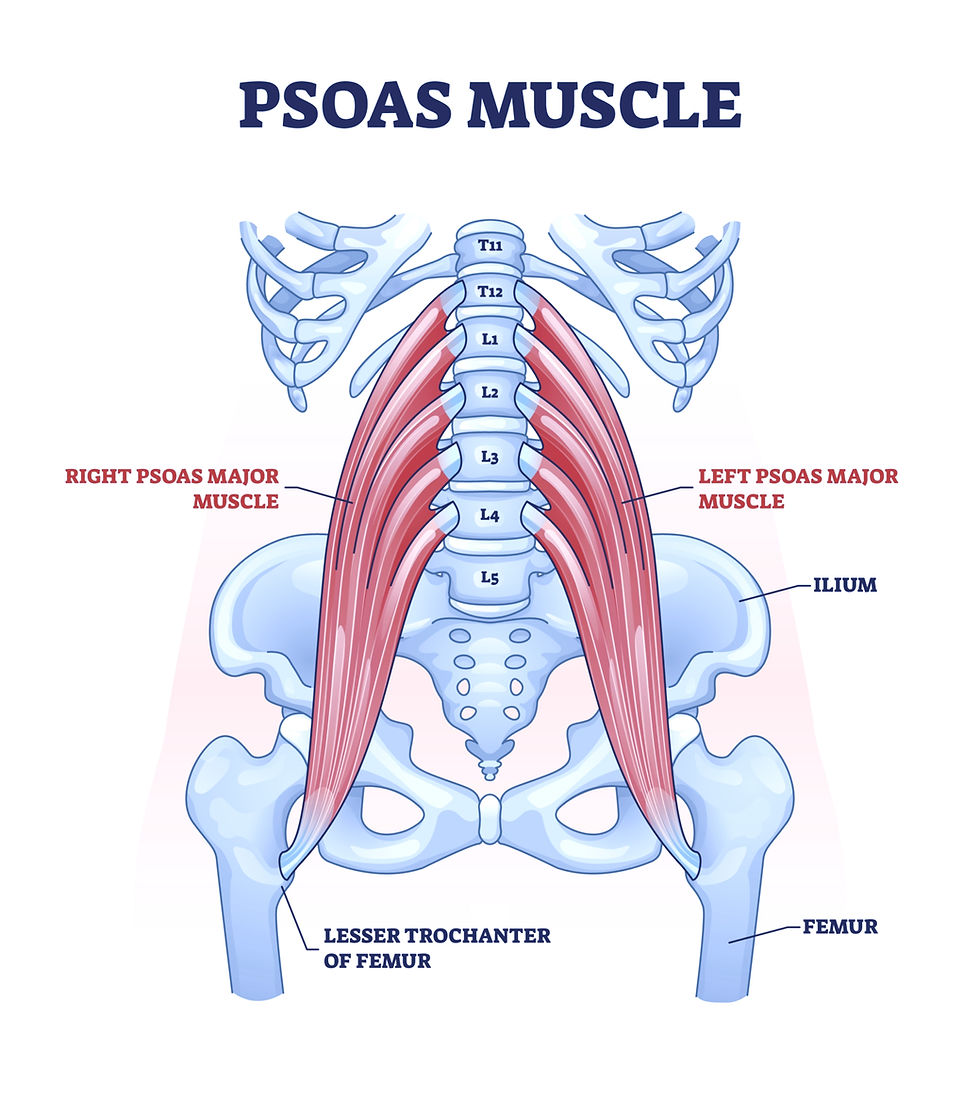
These are just a few of the muscles that will benefit from a heart center and throat center opening yoga practice.
A few more inspiring pictures...




I wanted to include these pictures as inspiration. I have a "yoga wheel" and absolutely love it! Do not
get caught in the “more is better approach to stretching." What is best is what feels safe to your mind-body!
Want to Know More?
I have more posts coming soon, including detailed posts on all these muscles!
Check out my books on health and wellness!

The Elemental Woman
A Conversation for the Modern Western Woman Inspired by the Healing Wisdom of the Ancient Eastern Sage

Food & Mood Journal
A tracking guide to connect the food you eat, the emotions you feel, and increase the feeling of deep self-love

Mindful Movement Journal
A tracking guide to connect the motions you make, the emotions you feel, and increase the feeling of deep self-love
Basic Ayurveda
The Elemental Woman Supplement Guide
About the author:
Since 2004, Tara Lee Clasen has been assisting women on their healing adventures. As a woman-focused physical medicine provider, also trained in Eastern medicine, she knows transformation is possible and knows that with reflection and self-love, your future is full of bright possibilities.
#tmjpain #tmj #neckpain #shoulderpain #ribpain #chronicpain #jawpain #headaches #migraine #whiplash #asthma #vagusnerve #massagetherapy #manualtherapy #chiropratic #tmjpain #tmj #neckpain #shoulderpain #ribpain #chronicpain #jawpain #headaches #migraine #whiplash #asthma #vagusnerve #massagetherapy #manualtherapy #chiropratic


Comments